Clean Up What I Messed Up Starting All Over Again
Arachnophobia. Entomophobia. Ophidiophobia. If you didn't have a fear of spiders, insects or snakes before, you volition after learning they're some of the most dangerous animals on the planet. Some are isolated, like Komodo dragons, which are found merely in Indonesia. But others, like the bull shark, are much more widespread. Either mode, these animals correspond the very deadliest that Mother Nature has to offer.
Cape Buffalo
Weighing anywhere from 600 pounds to well over a ton, the cape buffalo is i of the most unsafe species on the African continent. Their condition at the very top of the food concatenation means they have few natural enemies, and these unpredictable animals are known to kill or maim hundreds of people every year.
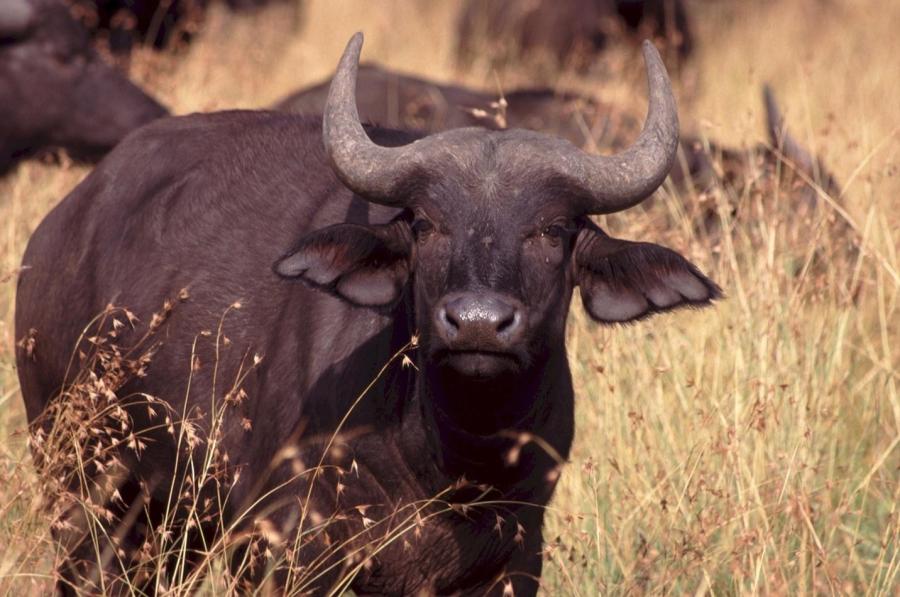
What makes this item species, besides known as an African buffalo, and then dangerous – and therefore so desirable for trophy hunters? Their horns, which fully fuse together at effectually five or six years of age, are a congenital-in battering ram, and their massive size and weight tin overcome nearly any predator. They're also highly vocal creatures who will attack as a herd, overwhelming even the nearly cunning of animals.
Box Jellyfish
Box jellyfish are beautiful to look at, with their translucent bodies and wispy tentacles gliding through the water. Out of the dozens of species of box jellyfish known to man, most won't damage y'all if they brush up against you in the water, but there are several whose venom is potent enough to make yous sick (or even kill you).
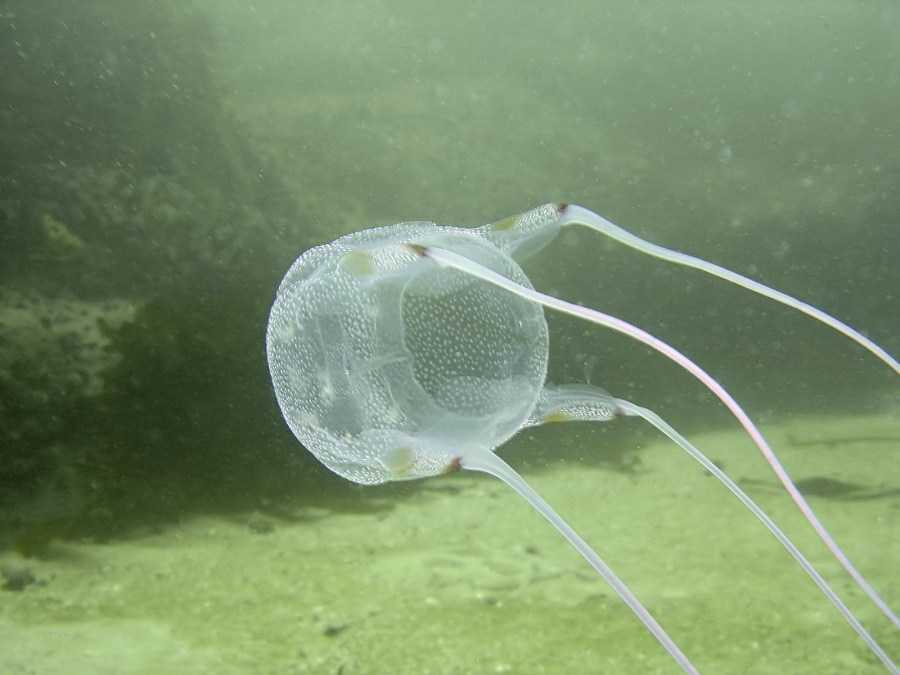
The three most dangerous sub-species of the box jellyfish are the "hub" jellyfish, found mainly in the coastal waters of Nippon. the tiny Irukandji, which actively chase prey in the waters of northern Commonwealth of australia, and carukia barnesi, another highly venomous Australian jellyfish. Fifty-fifty the smallest amount of their venom can cause dizziness, nausea, difficulty animate and body pain.
Cone Snail
Look a infinitesimal, you're saying snails are dangerous? Well, not all of them; your average garden variety snail is equally harmless equally a butterfly. We're talking cone snails, which refers to a group of venomous, cannibal and predatory tropical marine snails (also known as gastropods) that come in all kinds of sizes, shapes and colors.
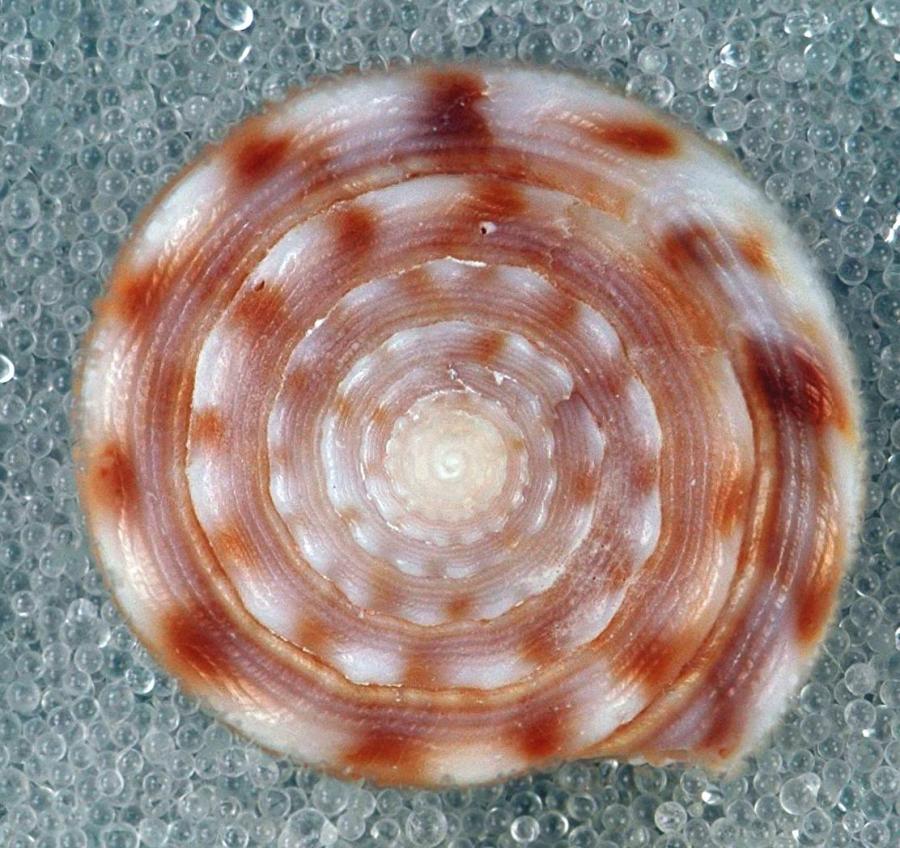
In general, the bigger the cone, the more than venomous the snail. The larger ones actually chase small fish, while smaller snails snack on micro-organisms and all manner of aquatic worms. They paralyze their casualty and inject their venom via a needle-like extension that is spinous to amend grab on to their victim. Some venoms are quite mild while others can be fatal.
Pufferfish
Institute mostly in tropical waters, pufferfish have adult a unique natural defense that helps recoup for how slow they are in the h2o – they're highly toxic. The level of toxicity tin vary from species to species, and even where the poison is held can differ. Scientists take found venom in the liver, ovaries and fifty-fifty in the pare itself of sure puffers.
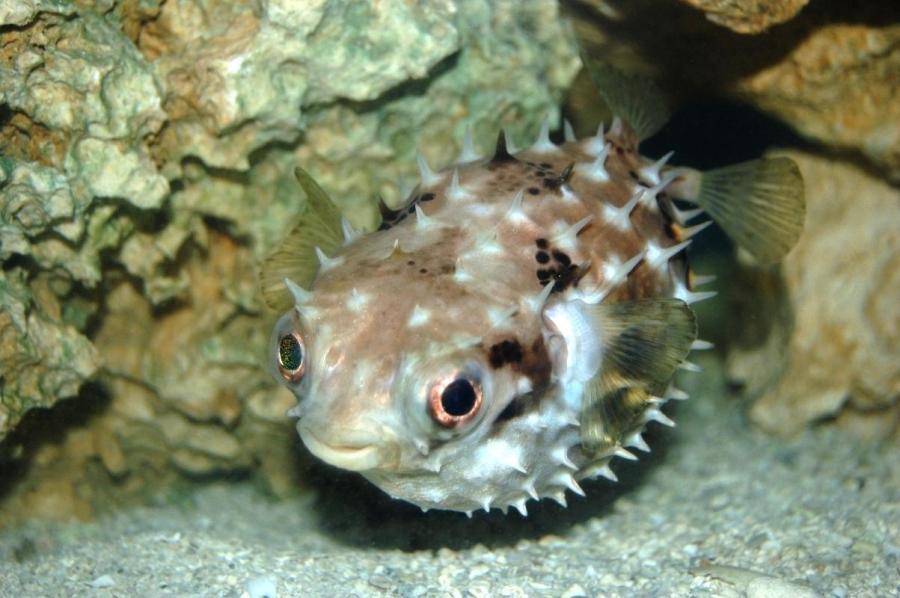
Despite how dangerous information technology can be eaten, pufferfish is considered a delicacy in Japan and several other countries. It takes a highly trained chef to be able to successful remove the venomous parts of the fish and correctly ready information technology for consumption. Every twelvemonth, at that place's at least a few deaths due to incorrectly prepared pufferfish.
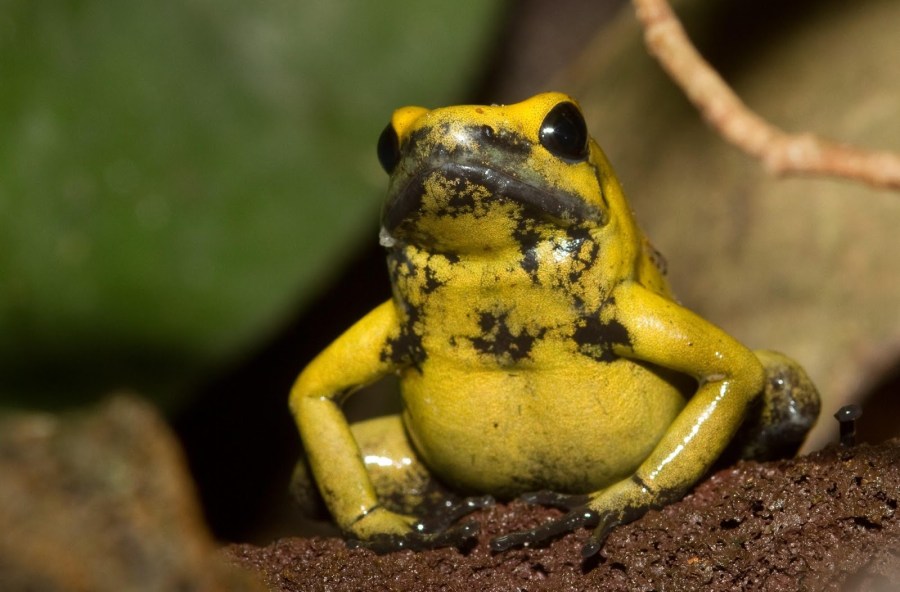
Golden Poisonous substance Frog
These brightly colored frogs may look all innocent merely hanging out in tropical rainforests, but their skin is covered in a highly toxic toxicant that deadens its victims' nerves and can lead to heart failure and decease. It's their natural defense force machinery for an environment in which they're at the lower cease of the nutrient chain.
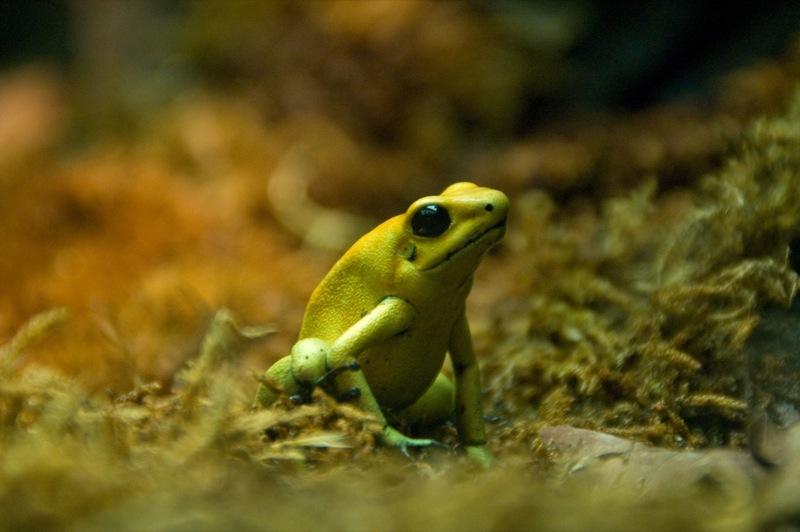
The aureate poisonous substance frog comes in a diversity of colors, including green and pinkish, with yellow being the nigh common. Many indigenous cultures use the concentrated poison as a hunting weapon, dabbing it onto the tips of their spears and arrows. The frogs themselves are immune to it, and hunt for prey using their exceptionally long tongues.
Black Mamba
At that place's a reason assassin Beatrix Kiddo, played by Uma Thurman in Quentin Tarantino'southward bloody revenge film Kill Bill, goes past the code name "Black Mamba;" she's the deadliest hitwoman on the team. The blackness mamba, which is native to sub-Saharan Africa, is incredibly lethal, 2nd merely to the king cobra in terms of size.
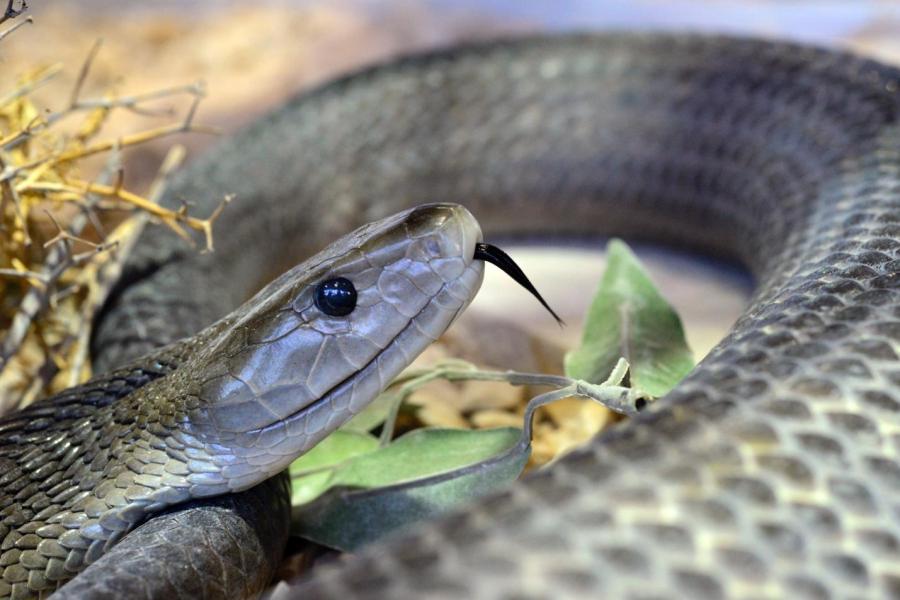
It has few natural predators, and is equally comfortable high up in the trees or gliding across the dry desert floor, where they can reach short distance speeds up to x mph. Their venom is comprised of mostly neurotoxins, which can induce symptoms similar blurred vision, vertigo and respiratory paralysis in equally little as ten minutes. Ane skillful affair about the black mamba is that it merely attacks when information technology feels cornered or threatened, so be sure to keep your distance.
Musquito
Certain, you probably call back mosquitos every bit more annoying than annihilation, but these buzzy, claret-sucking insects are actually one of the deadliest creatures on the planet. They kill more than 700,000 people a year through the spread of infectious diseases similar Westward Nile virus, dengue fever, malaria and yellow fever.
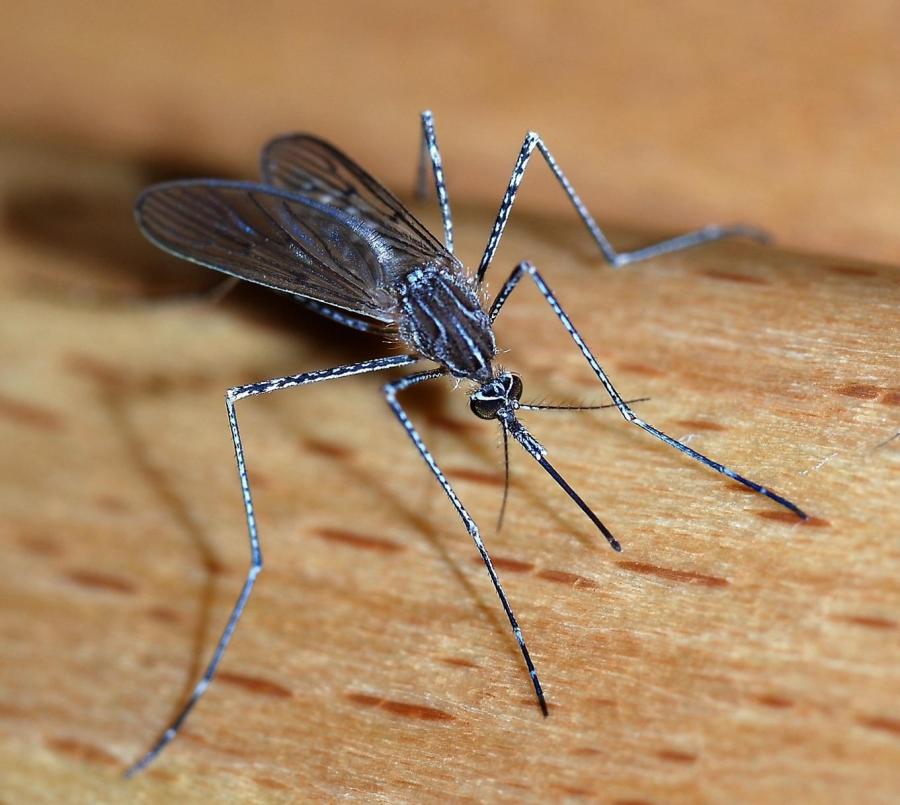
They're especially dangerous in areas where fresh running h2o isn't ever available, since the females lay their eggs in brackish water. And, in improver to the diseases mosquitoes spread, their saliva can induce an allergic reaction in some people that can range from balmy discomfort to severe shock.
Saltwater Crocodile
The saltwater crocodile is i of the largest crocodiles in the globe, and an incredibly dangerous predator that ambushes its prey and swallows it whole. But that hasn't stopped poachers from hunting information technology. Crocodile pare is highly prized for its commercial value in the mode manufacture, and the meat and eggs are considered delicacies.
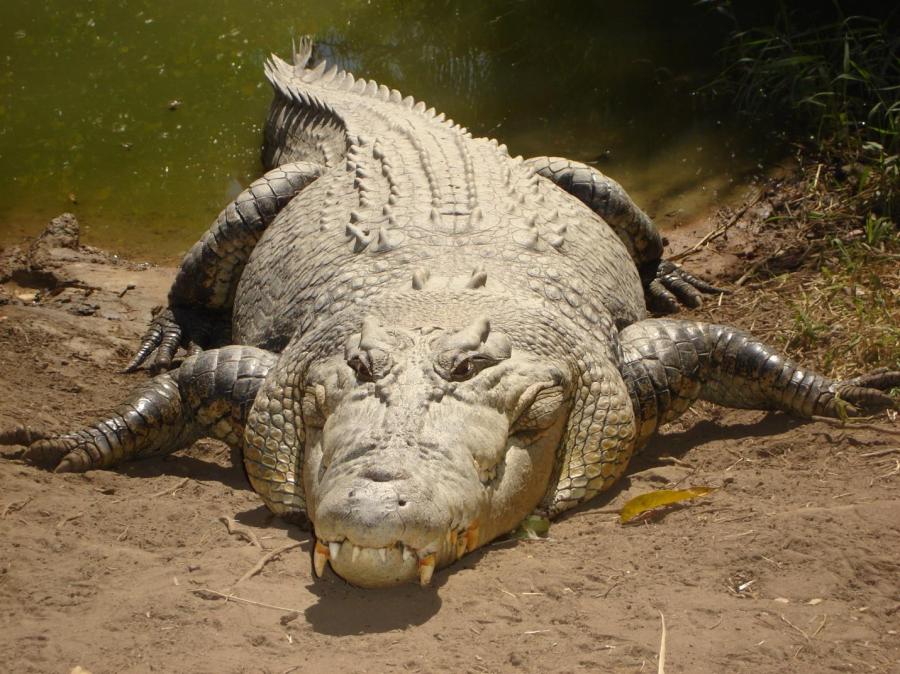
Every bit its proper noun implies, the saltwater crocodile is found mainly in the salt marshes and wetlands of India's east coast down through Commonwealth of australia. Males tin can grow up to 20 feet in length and weigh up to 2,300 lbs. In general, they're about iv to v times bigger than female saltwater crocs and are surprisingly agile.
Tsetse Fly
The tsetse fly is similar to the mosquito in that its lethality comes non from the wing itself, but from the highly infectious diseases it spreads – mainly sleeping sickness that affects both humans and animals. It's plant predominantly in tropical Africa and is more often than not divided into three dissimilar categories: savannah, forest and riverine.
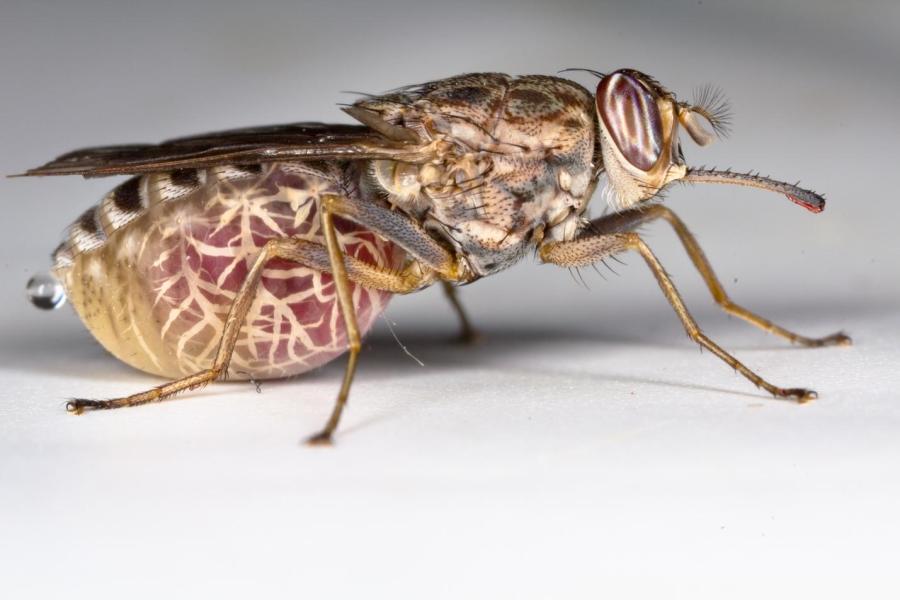
Areas infested with tsetse flies are as well doubly affected because they make raising cattle and other livestock near impossible, resulting in hunger, famine and general poverty. Surprisingly, the easiest and most cheap way to control the tsetse fly population is with a simple blue tarp; the color confuses the flies and allows them to be collected and killed.
Western Taipan Snake
Unless you lot're trekking through the outback of eastern Australia, it's highly unlikely y'all'll e'er come across this snake that's considered to be one of the deadliest in the world. It's not fifty-fifty peculiarly aggressive for a serpent, but if information technology does strike you, meliorate have your affairs in order. Its venom is the most toxic of any snake on the planet.
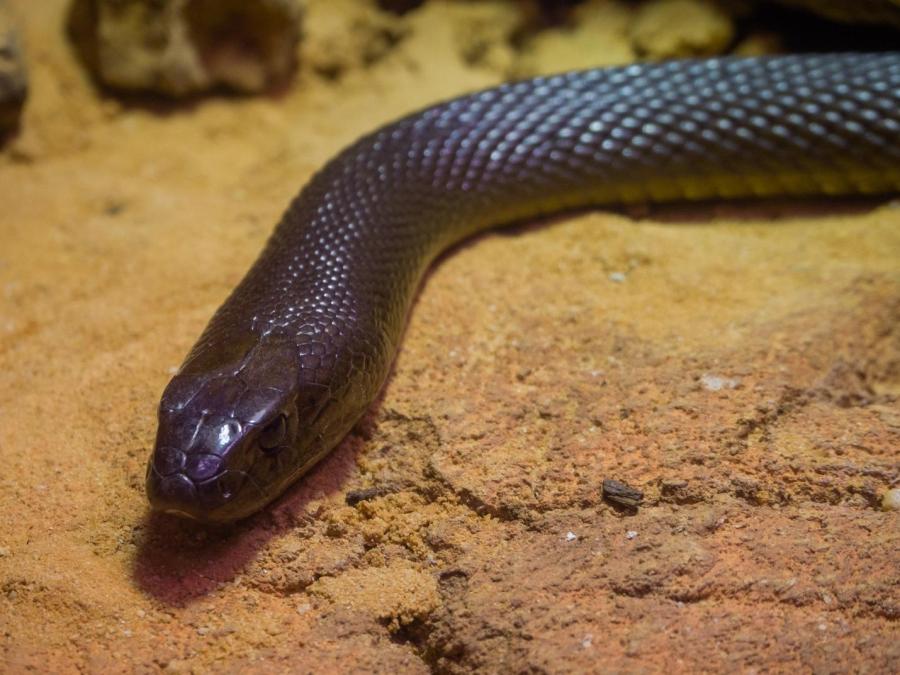
The deadly venom is a mixture of neurotoxins, hemotoxins and diverse other elements that affect numerous parts of the body. Besides known as the inland serpent, the western taipan is protected by special conservation laws and tin can be safely observed at several zoos in Australia, Russia and the U.Due south.
Hippopotamus
The name "hippopotamus" is derived from Greek meaning "river horse," which is non at all what comes to listen when looking at the stout, stocky and altogether awkward hippo – the third-largest land mammal in the world. And though they're mostly herbivores and not territorial, their aggressive and unpredictable behavior can be extremely dangerous.
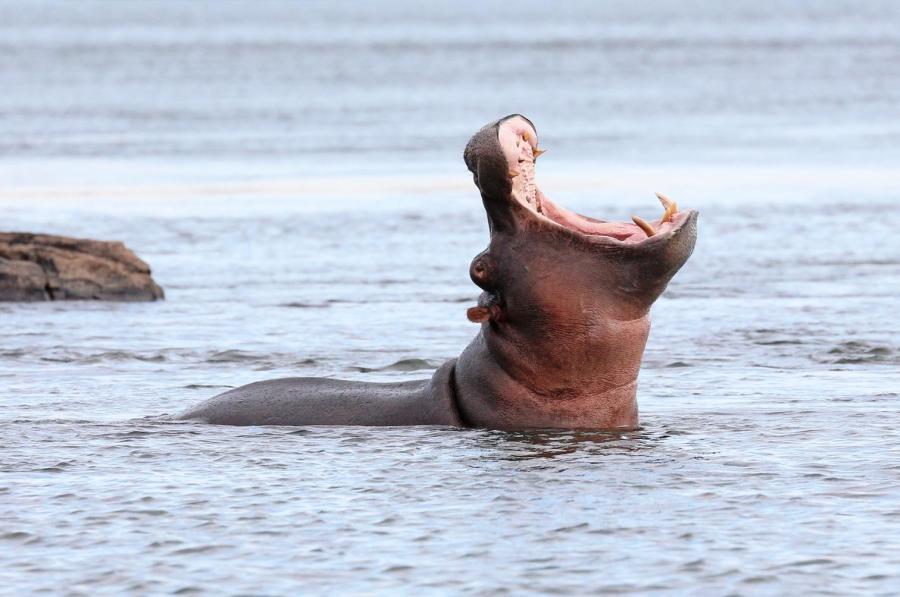
A fully grown male hippo can weigh upward to three,300 lbs. Even on land, the hippo can exist surprisingly fast – they can attain top speeds of xix mph over a short altitude. And information technology'south not unheard of for male hippos to attack boats and other small crafts in the rivers and streams of sub-Saharan Africa. They're very territorial, and kill thousands of people every twelvemonth.
Bull Shark
Despite their small size in comparison to bigger sharks similar great whites, the bull shark is among the deadliest known to man. They're incredibly ambitious, quick to attack and hunt and swim mainly in shallow, coastal waters, which means they're much more likely to encounter humans – which doesn't always end well.
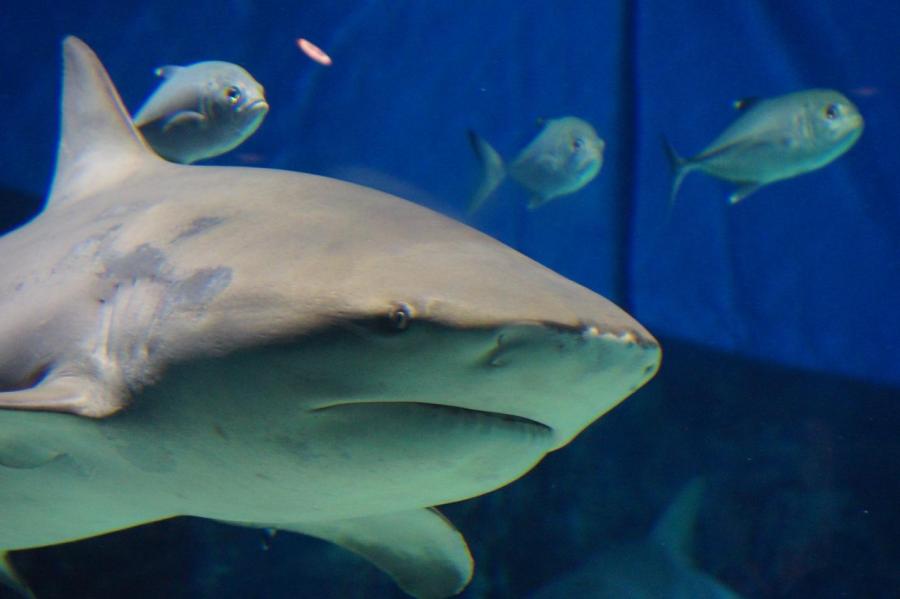
Unlike many other species, female bull sharks are more often than not bigger than the males, and can summit out around viii feet in length and weigh 300 lbs. Though they prefer to chase in the murky shallows of warm coastal waters, they tin can place bright colors and other nearby objects. Fifty-fifty worse? They're opportunistic feeders and will feed whenever they can.
Deathstalker Scorpion
Even if yous're the kind of person who doesn't usually get freaked out past scorpions, this i is definitely worth panicking over. Also known equally the xanthous or Naqab desert scorpion, the Deathstalker is one of the virtually dangerous scorpions in the globe thanks to its highly toxic venom and painful sting.
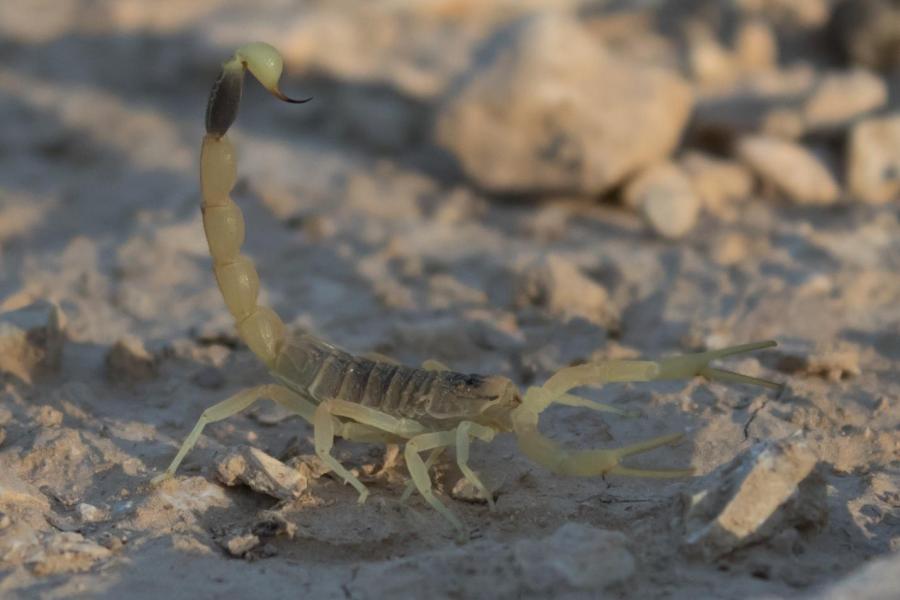
The Deathstalkers preferred habitat is desert and arid shrubland areas that bridge from the Sahara and Arabian desert through Egypt and Ethiopia. If yous practice happen to get stung, in that location has been a breakthrough evolution in anti-venom treatments, merely (of form) the Deathstalkers venom has been proven to be very resistant.
Great White Shark
It's almost impossible to recall of the great white shark without thinking of Steven Spielberg's "Jaws," which was based on a novel nearly a shark that terrorizes a small beach community on the Fourth of July. Peachy white sharks love to hang out in warm, coastal, offshore waters of places like Mexico, South Africa and the Us – all places that ensure contact with humans.
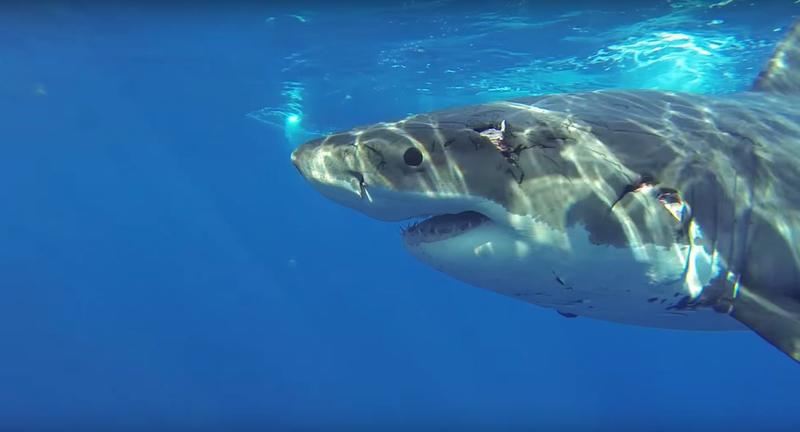
The cracking white has no natural predators (who'd want to mess with a shark that can counterbalance upward to 4,000 pounds?) and hunts everything from fur seals and seabirds to sea lions and other marine animals. In fact, humans aren't a natural prey for not bad white, just close contact with great whites can provoke attacks, which number in the hundreds every year.
African Bee
In that location's a slight misconception in only why the African bee, which is in many ways similar to the average European bee, is so dangerous. Scientists have discovered their sting is not much more venomous than the typical bee sting, rather, it'due south aggressiveness with which the bees attack.
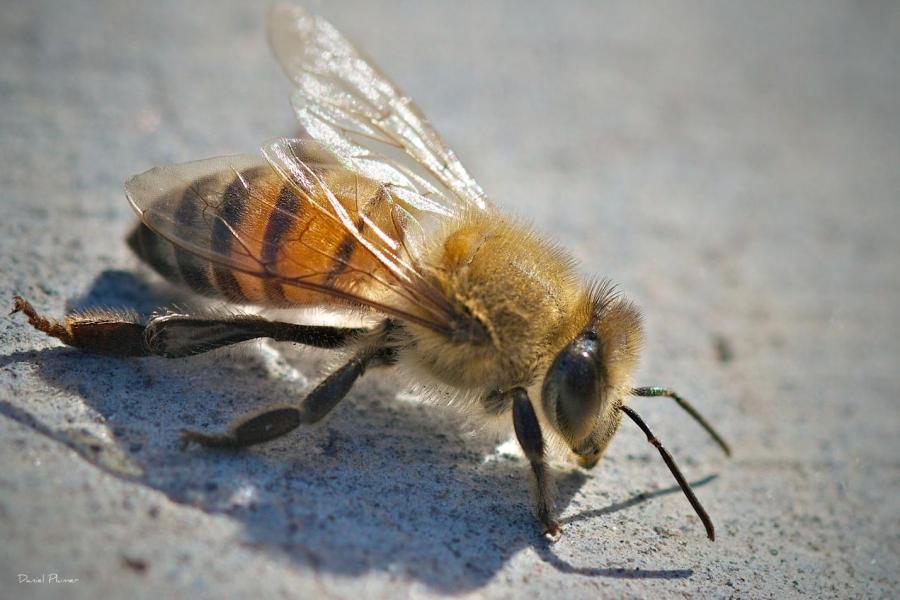
African bee colonies are extremely ambitious and prone to swarming. If they perceive a threat to the hive, they'll transport out iii to four times equally many bees as a European bee colony would. Retrieve of information technology equally quantity over quality. The more than bees in that location are, the more opportunity there is for them to sting, and the more likely it is that the unfortunate victim will suffer maximum damage.
Bullet Ant
Venomous stinging ants seem like something fabricated up by the writers of a Sci-fi movie, merely these nasty little guys are all too real. They were discovered in 1775 by a Danish zoologist, and got the nickname "bullet ant" because some victims have likened the pain of their attack to a gunshot wound.
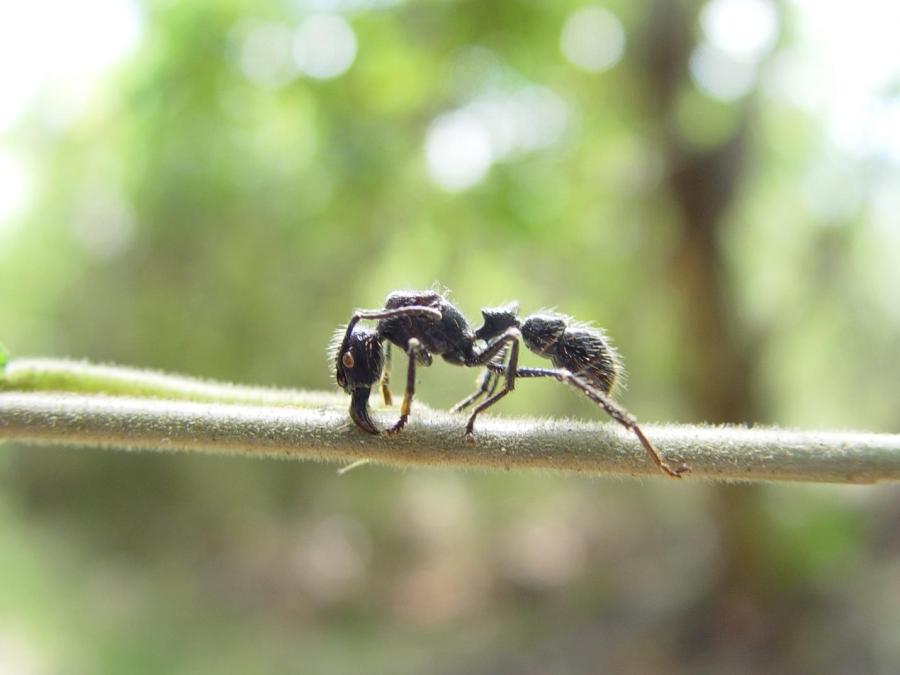
The only practiced matter well-nigh these ants, which live in the tropical rainforests on the eastern side of South America, is that they're not naturally aggressive or territorial. They are foragers, non hunters, and they more often than not only attack when defending their nests, which tin can contain up to several hundred worker ants, as well equally a queen.
Stonefish
Like to the pufferfish, the stonefish is a highly toxic marine fish that has nevertheless become a sought-after delicacy throughout Asia and the Indo-Pacific. It delivers its venom through a ridge of fins on its back, which tin can be easily stepped on or disturbed by swimmers. The worst part? The more pressure that is applied, more venom is released.
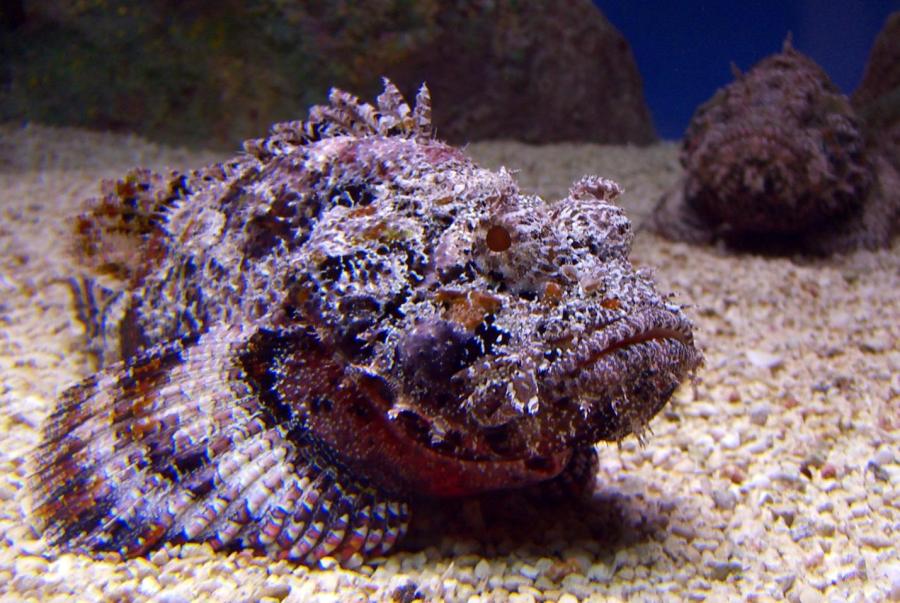
Stonefish stings can exist incredibly painful and sometimes lethal. As recently as 2008, more than a dozen non-fatal stings were reported in Queensland, Australia. But in one of nature's ironic twists, stonefish meat is really quite sweet and mild, and can be eaten safely if the venom-packed fin spikes are removed.
Deer
This one may non seem so obvious, but in reality, deer are one of the most dangerous animals in America. The trouble? Humans are encroaching on their natural habitat, and forcing deer populations into close quarters with more roads and highways, leading to an increase in deer-related automobile crashes.
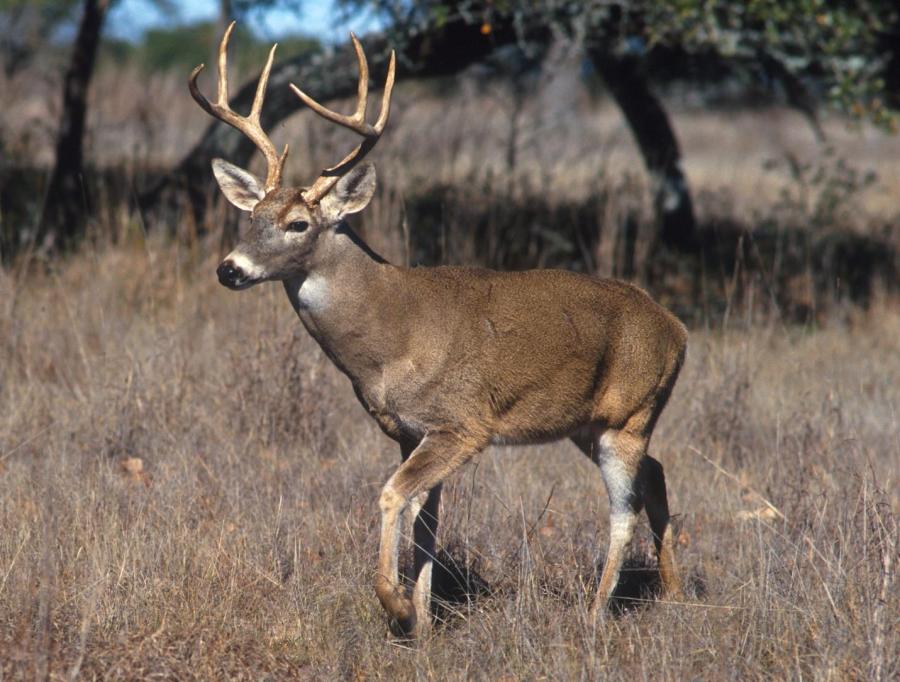
That'southward why those "deer crossing" signs y'all meet on the side of the road should be taken extremely seriously. (It'due south also where the phrase 'deer in the headlights' originated). It's estimated deer-related auto accidents kill more than than 100 people every yr, which is more dogs, horses, spiders and snakes combined.
African Elephant
The African bush elephant is the largest terrestrial mammal on the planet, and one of the deadliest, besides. Their overwhelming size is one factor – fully grown males can stand upwardly to 13 feet tall and weigh over 6.5 tons, while females are generally about one-half equally big. Their tusks alone tin accomplish up to eight feet in length.
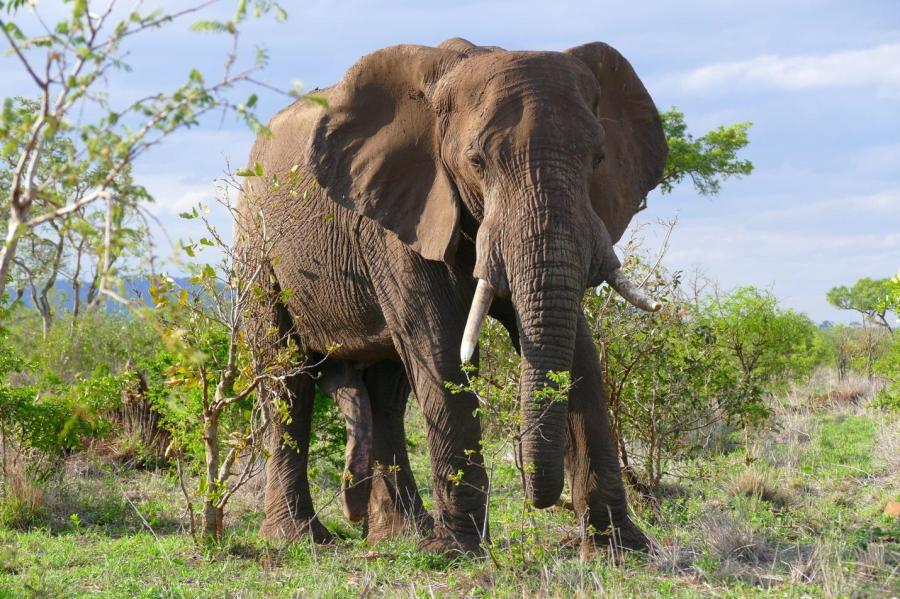
Elephants are highly intelligent creatures and can be quick to attack when provoked or threatened by poachers and hunters. In some cases, elephants have been known to go on rampages that kill hundreds of people. And similar deer, their natural habitat is shrinking, which makes more such confrontations inevitable.
Spotted Hyena
Humans and hyenas go way back. There are depictions of hyenas in the cavern paintings at Chauvet, which date dorsum nearly 40,000 years. They're famous for beingness vulture-similar scavengers that will consume literally anything, just the spotted hyena is also an aggressive predator that can (and will) attack humans.
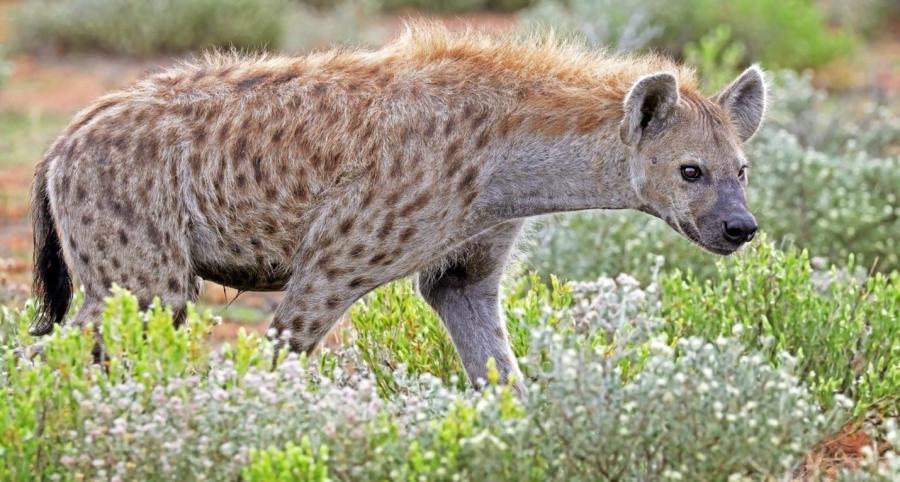
Hyenas are built for ability and speed. Males tin can abound upward to five feet in length and weigh more 100 pounds, with powerful jaws and a bite capable of crushing basic in a thing of seconds. They typically roam in packs, and have been known to set on more frequently at night.
Komodo Dragon
Constitute exclusively in a handful of Indonesian islands, the Komodo dragon is the largest species of cadger in the world and a deadly predator. They sit at the very top of the food chain, and chase pretty much anything that walks (and sometimes not – they've besides been known to scavenge carrion).
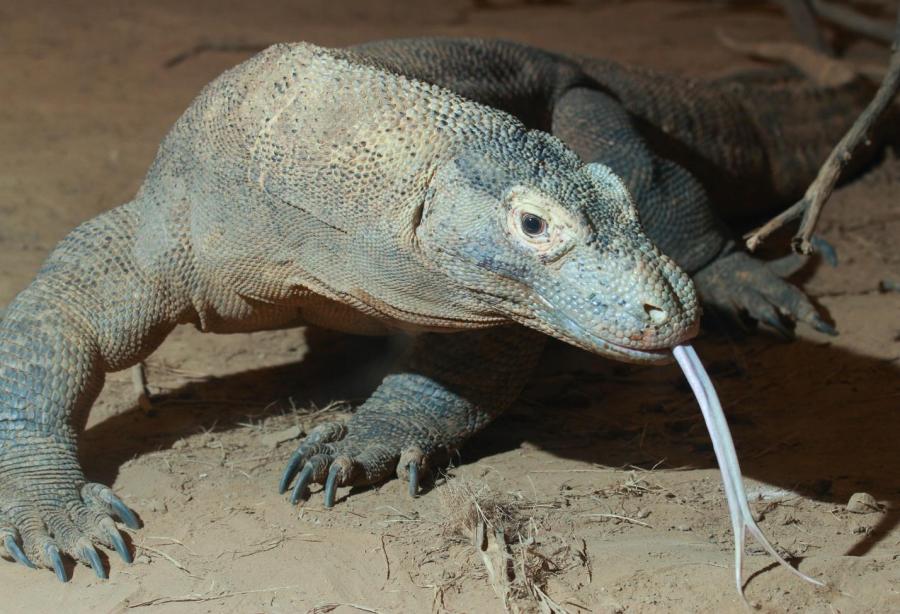
Their enormous size (males can grow upward to x feet long and weigh over 200 pounds) makes it easy for them to kill their prey outright. This happens through a combination of the dragon's razor-sharp slashes and venomous bite that prevents the victim'south blood from coagulating. In contempo years, they've been put nether special conservation status in Indonesia, and even have their own national park.
Boomslang Snake
The boomslang is found only in sub-Saharan Africa and is generally considered to pose a threat to only the small animals it feeds on. You lot have to give this highly venomous tree snake a little credit; information technology's a fairly timid species and won't assail annihilation likewise big for information technology to eat or strike unless it's provoked.
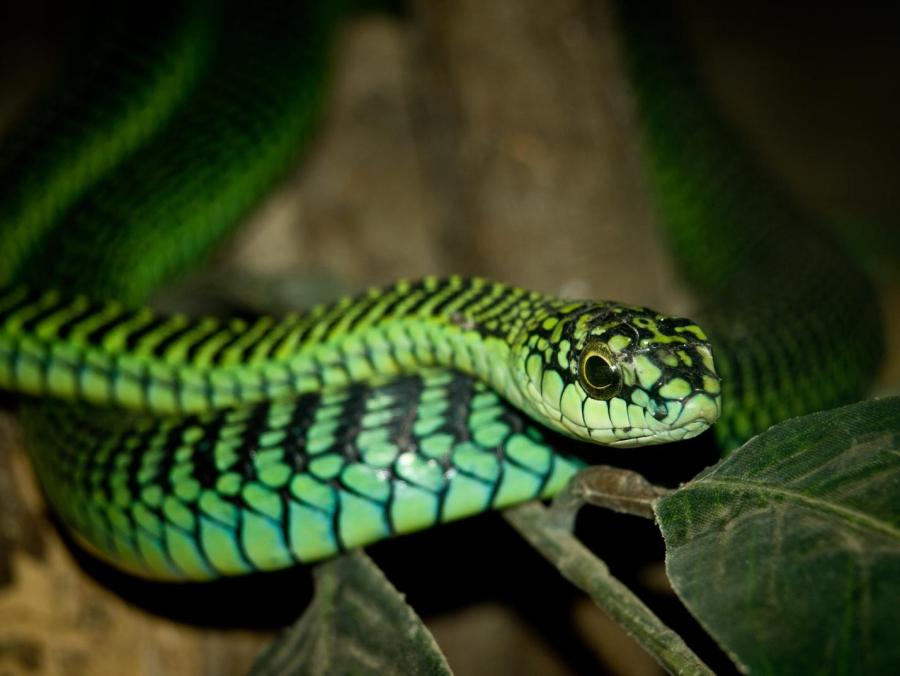
But what makes this snake so lethal is its highly toxic venom, which is designed to finish the victim'south blood from clotting, leading to massive internal and external bleeding. Also, it can open its jaws a terrifying 170 degrees, and has larger-than-usual fangs to ensure a secure seize with teeth. The worst part? It tin take hours for symptoms to develop.
Australian Funnel-Spider web Spider
What's scarier than a highly toxic spider? A highly toxic spider whose fangs are powerful enough to penetrate through fingernails, shoes and other soft materials. Thankfully, the Australian funnel-web spider is but found on the eastern coast of the island continent, making information technology highly unlikely you'll ever run across one.
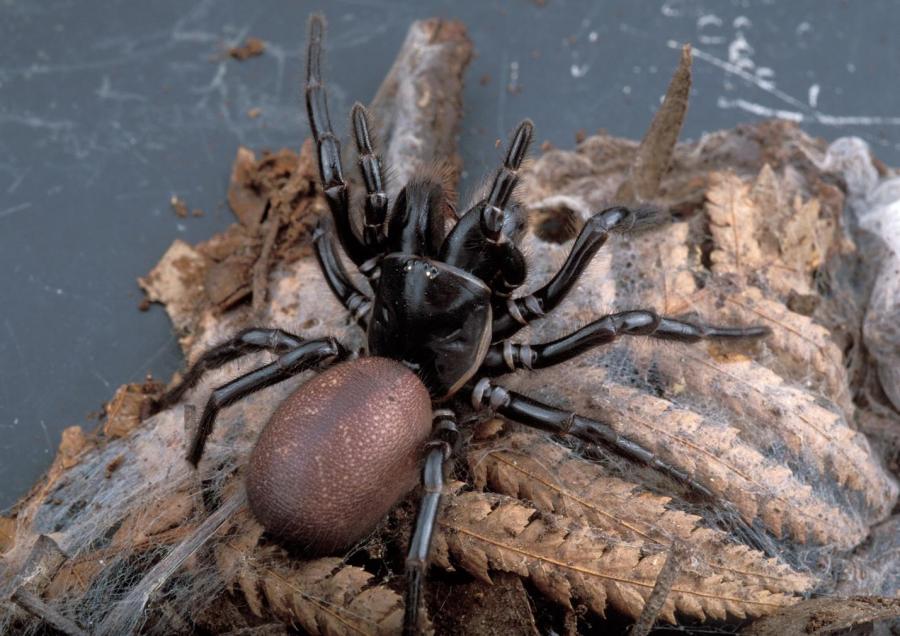
But if you did, even the smallest bite should be considered extremely dangerous. The funnel-web spider's venom is one of the near lethal in the world and works extremely quickly, producing symptoms ranging from nausea and defoliation to shortness of breath and muscle spasms. And pray that it was a female that bit you; they're generally considered to be less toxic than males.
Blue-Ringed Octopus
Octopuses are some of the ocean'south strangest creatures, and in the case of the blue-ringed octopus, i of the deadliest. Their venom is extremely lethal, containing high doses of compounds that induce nausea, respiratory failure and heart failure. As of now, there is no known anti-venom.
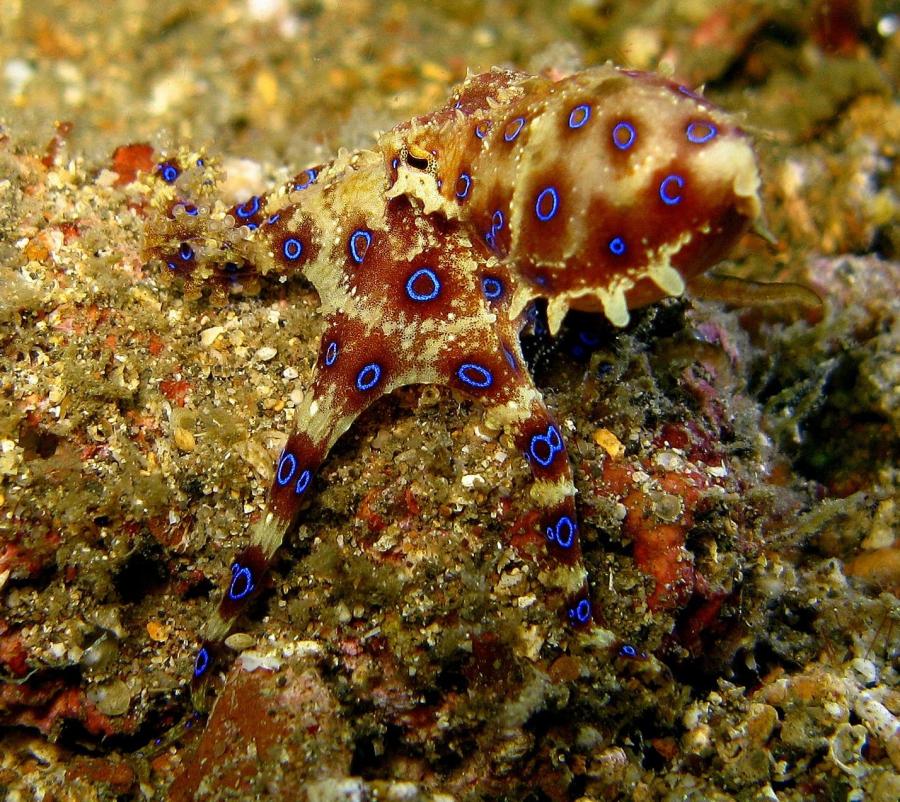
The blueish-ringed octopus is pocket-size, usually only about five to eight inches in diameter, and hunts shrimp, crab and other small prey. It spends near of its time hiding from larger predators, simply is quick to attack if provoked, displaying its signature blue-ringed blueprint in a highly visible threat display.
Portuguese Human being O'State of war
Simply the mere sight of a single one of these venomous hydrozoa (aye, they're really non jellyfish) on a beach can be enough to warrant closing it to the public. Their tentacles, which can extend for equally long every bit 30 feet beneath the surface, sting and paralyze their prey, but don't worry – for humans, information technology'south more than painful than information technology is mortiferous.
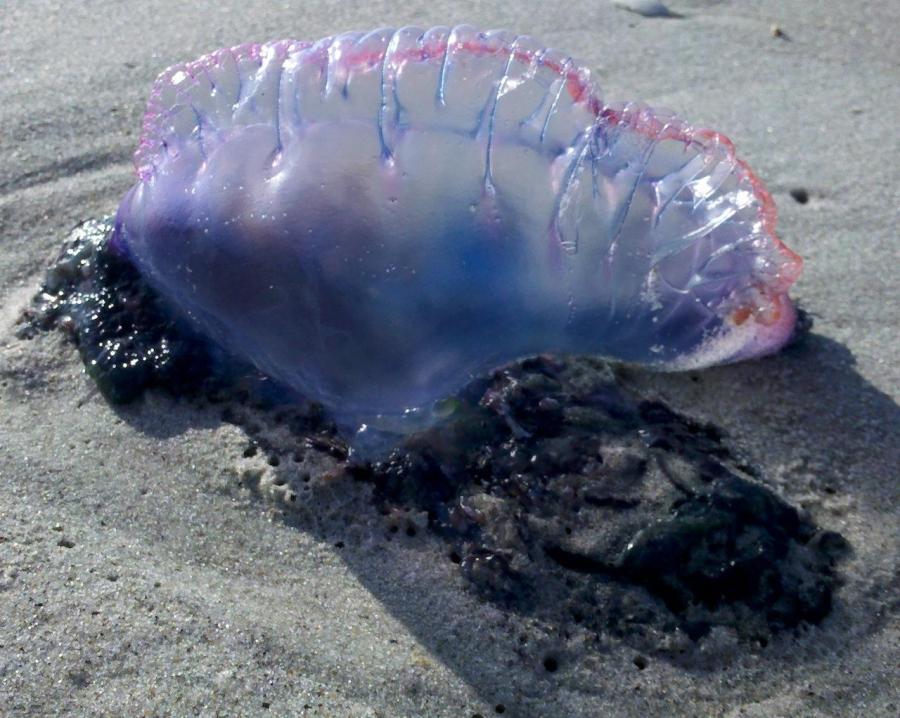
They typically can exist found in groups of upward to i,000 or more than (which is pretty scary, if you think about it), and attract other animals who feed on the smaller fish that seek shelter among their stinging tendrils. At least they're easy to spot, cheers to the bluish-purple tinged bladder that sits on the sea'southward surface.
Assassin Problems
The assassinator bug lives upward to its name with a terrifying method of killing its prey. It uses its long proboscis to inject a venomous saliva that liquifies the insides of its prey, making information technology easier to assimilate. But what makes the assassin issues truly unsafe to humans is the fact that there are some species that feed on claret, making them as deadly equally mosquitos.
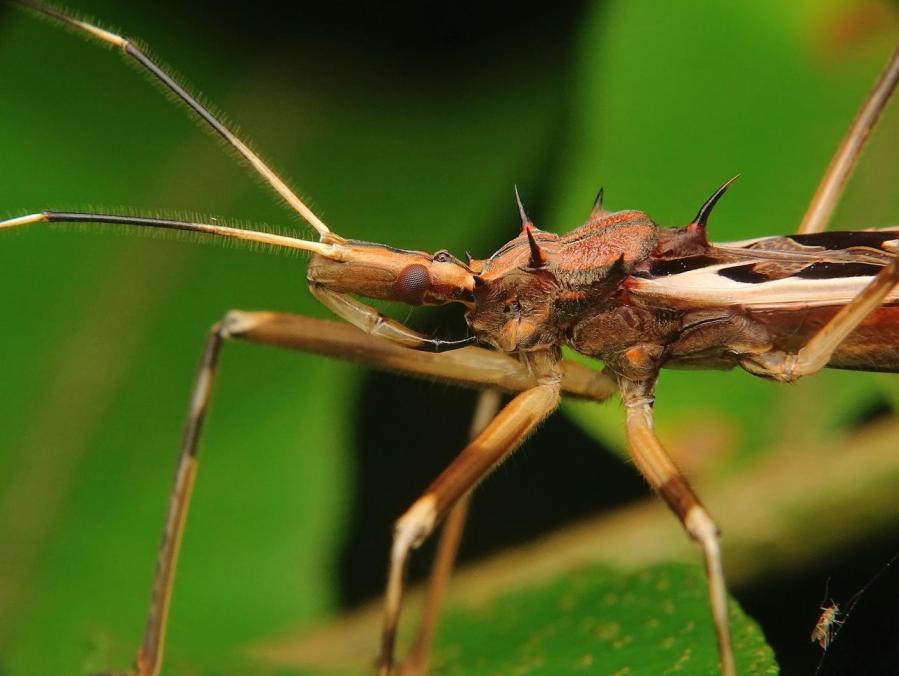
One species in particular, the "kissing bug," gets its proper noun from how information technology bites the soft tissue of the eyes and lips of sleeping humans. Found primarily in Central and South America, these bugs have been known to spread a tropical parasitic disease, Chagas affliction, that kills effectually 12,000 people every yr.
Rhinoceros
These giant herbivores are some of the largest creatures on Earth and are hunted for the very affair that makes them so dangerous – their horns. They're highly coveted by trophy hunters and poachers, and are fifty-fifty believed to have medicinal properties in some cultures. Every yr, people are gored past black rhinos, who are the well-nigh ambitious of all.
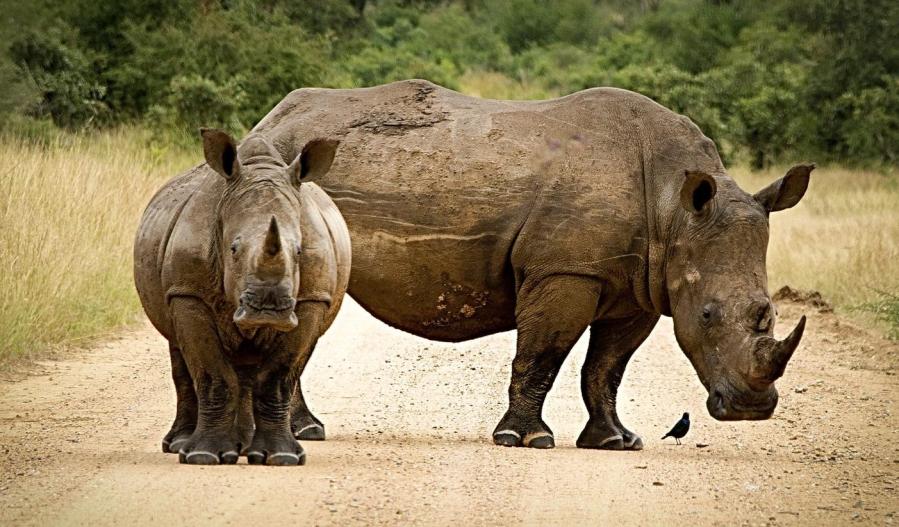
Black rhinos can weigh upwards to 6,000 lbs. and are shockingly agile; in curt distances over open ground they can reach speeds up to 34 mph. And though poaching and hunting has made them wary of humans, it's still best to keep a safety distance, lest they perceive a threat.
Leopard
With a top speed of 36 mph and incredible agility and strength, the leopard is a fearsome predator in sub-Saharan Africa and Southeast Asia. They typically stick to hunting wild prey at night, merely have been known to attack sick or injured humans if they are desperate enough, or if their territory is invaded.
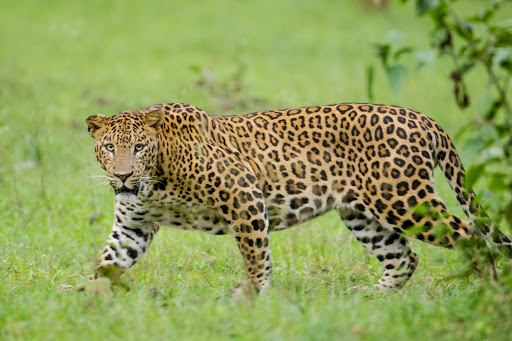
In fact, in that location are two well-known cases of and so-called "human-eating leopards," both of which occurred in Republic of india. The first, the Leopard of Rudraprayag, was reported to have killed more than 100 villagers between 1918 and 1926. Panar Leopard, the 2d, was far more than mortiferous, killing 400 people in the early 19th century.
Giant Pacific Octopus
Though not almost as unsafe every bit the blueish-ringed octopus, the behemothic pacific octopus is one of the ocean's deadliest predators, eating literally anything information technology can go its tentacles on; shrimp, lobster, snails – fifty-fifty other octopuses. There take too been reports of Giant Pacific octopus attacking modest sharks, making this one crafty cephalopod.
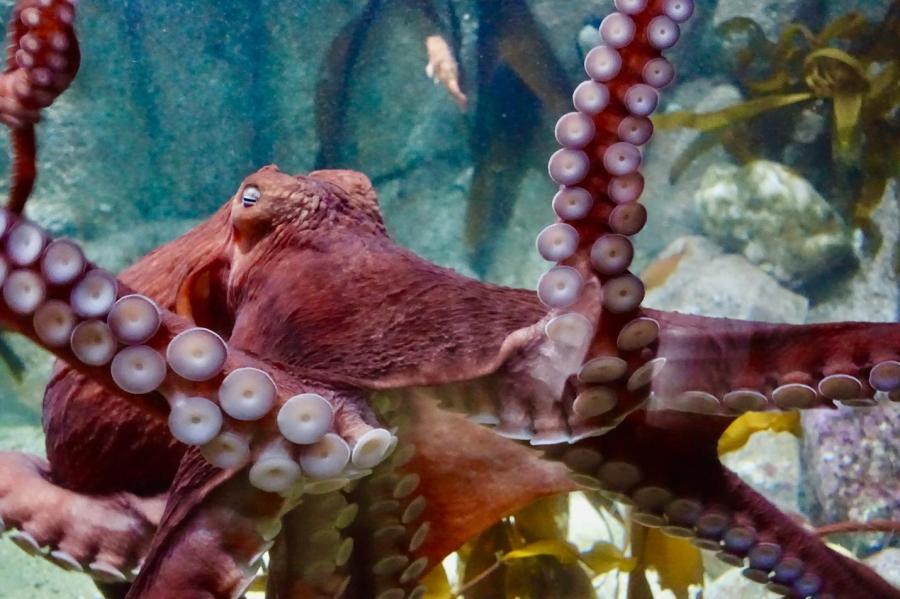
All octopuses contain toxins that paralyze and digest their casualty, and the Giant Pacific is no different. It uses its tentacles and compressible body to smother fish and other modest marine animals before injecting the toxin, which goes to work immediately. And just how large do they go? Guinness World Records lists the biggest ane at weighing more 600 lbs. with a reach of around thirty feet.
Six-Eyed Sand Spider
A cousin to the highly venomous recluse spider, the six-eyed sand spider is just equally dangerous, though non quite as common. These medium-sized spiders are plant mainly in sandy areas in southern Africa. They become their name from their preferred method of assail – they hide their flattened bodies in the smooth sand and strike when pocket-sized prey (or a foot) is near.
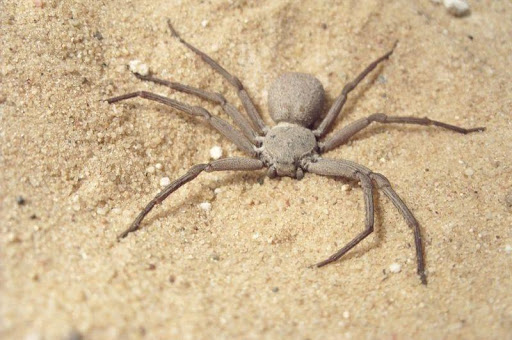
The 6-eyed sand spider contains a highly unsafe venom with necrotic furnishings that can lead to severe tissue damage, infection and fifty-fifty death. What makes this spider even more than scary is that it can become upwards to a year without eating, making information technology one of the most patient killers around.
Source: https://www.ask.com/culture/animals-you-dont-want-to-mess-with?utm_content=params%3Ao%3D740004%26ad%3DdirN%26qo%3DserpIndex
0 Response to "Clean Up What I Messed Up Starting All Over Again"
Post a Comment